


Release time:2026-05-27 15:39:06 view count:159
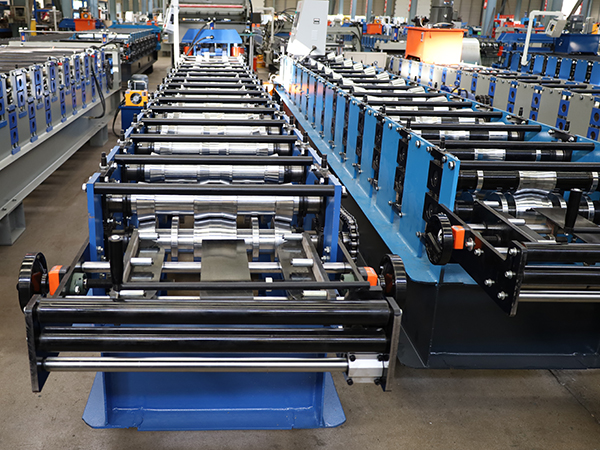
The transmission assembly generates continuous rattling, rubbing or impact sound during operation. Obvious vibration spreads to the whole machine, often accompanied by unstable rotation of rollers and shafts.
The driving parts run normally, but the driven rollers rotate slowly or stall. Relative sliding occurs between matching components, resulting in insufficient forming force and intermittent material conveying.
Transmission gears, bearings and connecting parts keep rising in temperature during operation. Severe overheating may cause discoloration of parts and accelerated aging of lubricants.
Individual transmission shafts or gear sets are jammed and cannot rotate freely. The machine may fail to start normally or stop suddenly during operation.
Fasteners and connecting components gradually loosen under long-term vibration. Key transmission parts shift from their original position, breaking normal matching relations.
Long-term operation causes abrasion on gear teeth, chain links and bearing inner races. Fatigue cracks and deformation reduce matching precision and stable power transmission.
Insufficient lubricant, deteriorated oil quality or blocked oil passages lead to severe dry friction. Lack of lubricating film increases friction heat, wear, overheating and abnormal noise.
Deviated installation angles, improper clearance and non-parallel shafts disrupt meshing and coordination. Unbalanced stress accelerates wear and vibration.
Long-term overload operation and frequent start-stop cycles impose impact loads on the system, damaging structural components and causing slipping or stalling.
Dust, metal scraps and impurities enter gear and bearing gaps, hindering movement and scratching components.
Continuous rubbing → poor lubrication
Regular impact → gear wear or looseness
Irregular noise → foreign matter inside
Vibration range helps locate faulty sections.
Check synchronization of roller speeds. Observe conveying condition to detect slipping. Manually test rotation flexibility after shutdown.
Monitor bearings, gearboxes and transmission housing temperatures. Local overheating indicates lubrication failure or excessive friction.
Open protective covers to inspect gear surfaces, chain tension and bearing conditions. Identify wear, cracks or foreign matter directly.
Tighten all loose bolts
Realign shafts and gears
Replace worn bearings/gears
Polish minor surface defects
Re-lubricate system
Adjust belt/chain tension
Replace worn transmission parts
Remove hidden jamming points
Replace deteriorated lubricant
Clean oil channels and tanks
Adjust assembly clearance
Avoid overload operation
Shut down and disassemble jammed area
Remove foreign matter
Repair deformation
Re-lubricate and restore movement
Reset components to standard position
Tighten all fasteners
Apply anti-loosening measures
Verify system stability
Follow fixed lubrication cycles and ensure all friction points receive adequate oil.
Check bolts, chains and gear meshing each shift; handle looseness promptly.
Avoid overload, overspeed and frequent start-stop operations.
Prevent dust and metal debris from entering transmission components.
Conduct full system inspection during downtime and replace worn parts in advance.
Transmission system failures in ridge cap roll forming machines mainly result from wear, poor lubrication, misalignment, overload operation and foreign matter intrusion. Accurate diagnosis through sound, vibration, temperature and visual inspection enables fast fault localization. Combined with targeted repair and standardized maintenance, stable transmission performance and continuous production quality can be ensured.

Copyright © 2026-2027 Mingmu Roll Forming Machinery Manufacture All Rights Reserved