


Release time:2026-05-27 15:47:34 view count:176
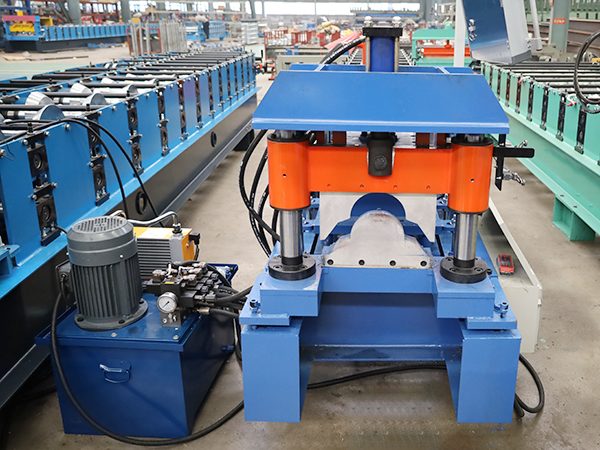
Loose bolts and connecting parts cause structural displacement, leading to increased vibration and continuous rattling noise during operation. Overall machine stability is significantly reduced.
Offset roller groups and misaligned guide structures result in material deviation, asymmetric forming, and dimensional out-of-tolerance in ridge cap profiles. Friction between material and components may also cause surface scratches.
Unbalanced loads act on bearings, rollers, and transmission parts, increasing wear and fatigue damage. In severe cases, components may jam or fail suddenly, leading to unplanned downtime.
Severely loosened structural fasteners may cause parts to shift or detach during high-speed operation, creating safety hazards for operators and production activities.
Continuous vibration from rotating and forming systems gradually reduces fastener clamping force, causing progressive loosening.
Frequent feeding, forming operations, and occasional blockages generate impact loads that disturb bolt and nut stability.
Uneven tightening torque, insufficient pre-load, or misaligned installation leads to early loosening during operation.
Dust, moisture, and metal debris entering threads increase friction instability. Corrosion further weakens fastening strength.
Without scheduled inspection and re-tightening, minor loosening gradually develops into serious structural instability.
Focus on frame joints, roller brackets, guide rail bases, transmission supports, and foundation bolts—areas exposed to high vibration and load.
Check for visible gaps, displacement, or thread exposure. After shutdown, gently test structural stability by hand to detect abnormal movement.
Use appropriate torque tools to check fasteners one by one. Mark inspected points and record those with insufficient tightening force.
Classify looseness into mild, moderate, and severe levels. Address severe cases first to prevent structural failure.
Shut down the machine and disconnect power. Clean threads and contact surfaces to ensure proper fastening conditions.
Tighten fasteners according to standard torque values. Avoid over-tightening (thread damage) and under-tightening (insufficient clamping force).
For multi-bolt joints, use cross-tightening sequences to ensure even stress distribution and prevent localized deformation.
Apply thread-locking agents or use spring washers and lock nuts at critical positions to resist vibration-induced loosening.
Replace worn or corroded fasteners promptly. Repair damaged threaded holes to restore reliable assembly conditions.
Recheck all repaired areas before restart to ensure no displacement and confirm secure fastening.
Perform daily checks on high-risk points and full-machine inspections weekly. Recheck key fasteners after start-up and shutdown cycles.
Use properly matched fasteners during maintenance to ensure consistent installation quality.
Regularly clean thread areas and maintain dry conditions to reduce corrosion and contamination effects.
Eliminate blockage, overload, and excessive vibration promptly to reduce stress on fasteners.
Record inspection results and recurring weak points, and increase inspection frequency for high-risk areas.
Loose fasteners in ridge cap roll forming machines are mainly caused by long-term vibration, impact loads, environmental effects, and improper installation. Through systematic inspection, standardized tightening procedures, and anti-loosening reinforcement, structural stability can be effectively restored. Combined with regular maintenance and standardized operation, equipment reliability and production safety can be significantly improved.

Copyright © 2026-2027 Mingmu Roll Forming Machinery Manufacture All Rights Reserved