


Release time:2026-07-23 17:18:46 view count:92
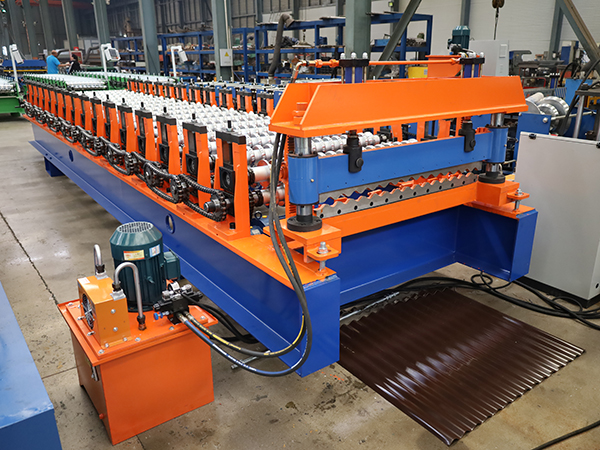
Before metal coils can be shaped into roofing panels, structural sections, or precision components, they often need to be cut into narrower strips. The slitting machine performs this essential transformation, converting wide parent coils into multiple narrower strips with clean, burr-free edges. For any factory or supplier operating in the metal processing industry, understanding slitting machine capabilities is fundamental to optimizing production workflows and product quality.
A slitting machine is designed to unwind a wide steel coil and cut it longitudinally into two or more narrower strips. The resulting strips are then rewound into smaller coils or cut to sheet length by a subsequent machine. This process enables steel mills and service centers to supply coils in dimensions that downstream manufacturing operations require.
The machine achieves cutting through rotating circular slitting knives arranged in sets on upper and lower arbors. The knives rotate together at matching speeds, with the gap between them determining the strip width. Precise lateral positioning of the knives on the arbor shaft controls the width of each individual strip produced from the parent coil.
A complete industrial slitting line comprises several stations that work together to process coils efficiently. The uncoiler holds and pays out the parent coil, which can weigh anywhere from 3 to 25 tons depending on the machine's capacity. An entry accumulator or pit allows the coil to be fed continuously while the front end of a new coil is being threaded through the machine, minimizing production interruptions during coil changes.
The slitting station itself houses the knife assemblies and associated mechanical systems for positioning and adjustment. A decoiler with an expandable arbor secures the coil core while hydraulic or motor-driven systems control the feed speed. On the exit side, a tension reel takes up the processed strips under controlled tension, producing tightly wound coils with consistent strip quality.
Many modern slitting lines incorporate a scrap chopper that continuously cuts the narrow edge trim strips into manageable pieces for automatic removal and recycling. This automation eliminates the need for manual trimming and keeps the production line running smoothly.
A versatile slitting machine factory can process a wide range of material types and thicknesses. Cold-rolled steel, hot-rolled steel, galvanized steel, Galvalume, stainless steel, and aluminum coils are all commonly processed on slitting lines. Material thicknesses typically range from 0.2 to 6.0 millimeters, with widths from 200 to 2,000 millimeters depending on the machine specifications.
The strips produced by slitting machines feed directly into downstream operations including roll forming, stamping, tube manufacturing, and blanking presses. The quality of the slitting operation directly affects the performance of these subsequent processes, making knife sharpness, slitting accuracy, and edge quality critical quality parameters.
Several technical factors influence the quality of slit strips from any slitting machine. Knife quality and condition are paramount—dull or damaged knives produce strips with burrs, edge ripples, and camber that can cause problems in downstream processing. A well-maintained machine with freshly sharpened knives produces clean-cut edges with minimal deformation.
Knife clearance—the gap between the upper and lower rotating knives—is another critical parameter. Setting the clearance correctly for the specific material type and thickness optimizes the shearing action and minimizes edge defects. Experienced operators adjust clearance based on material specifications and monitor results continuously throughout a production run.
When sourcing slitting equipment, the reputation and experience of the manufacturer should be a primary consideration. A factory with decades of experience in coil processing equipment is better positioned to advise on machine specifications, knife systems, and process optimization strategies. Look for suppliers who offer comprehensive after-sales technical support, operator training, and a readily available supply of spare knife components and wear parts.
The machine's build quality—particularly the rigidity of the arbor shaft, the precision of the knife positioning mechanism, and the control system's capabilities—determines long-term performance. Visiting an operational facility or reviewing case studies from existing customers provides valuable insight into real-world machine performance.
The slitting machine is a foundational piece of equipment in the metal processing supply chain. Its ability to convert wide parent coils into precisely dimensioned narrow strips with clean edges supports the entire ecosystem of metal fabrication and manufacturing. Sourcing this equipment from an experienced manufacturer ensures consistent strip quality, reliable production throughput, and long-term operational stability for your processing facility.
References
ASM International – Metalworking: Sheet Forming, Volume 14B of ASM Handbook Series.
The Fabricator – Steel Slitting: Fundamentals and Best Practices, Technical Publication Series.
Industrial Heating Treatise – Knife Systems for Steel Slitting Operations, 2019.
Metallurgical and Materials Engineering Journal, Vol. 38, No. 1, 2022 – Edge Quality Control in Precision Slitting of Steel Strip.

Copyright © 2026-2027 Mingmu Roll Forming Machinery Manufacture All Rights Reserved