


Release time:2026-07-19 19:13:45 view count:124
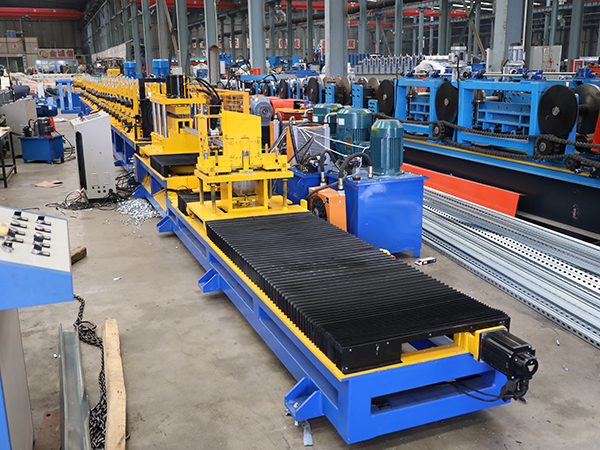
The primary international standard governing the safety of metalworking machinery, including roll forming equipment, is ISO 12100 — Safety of machinery: General principles for design. This standard establishes risk assessment methodology and hierarchy of controls that manufacturers and factory operators must follow when evaluating their equipment. Machinery supplied by reputable manufacturers typically carries CE marking, indicating compliance with the EU Machinery Directive 2006/42/EC.
In the United States, OSHA 29 CFR 1910, Subpart O — Machinery and Machine Guarding — sets the legal minimum for machine safety in general industry. Similar frameworks exist in every major manufacturing economy. Understanding the standards that apply to your jurisdiction is a prerequisite for building a compliant safety program.
Point-of-operation guarding is the most critical safety measure for roll forming machines. The forming zone — where the strip enters the rollers and material is progressively shaped — presents a severe pinch point hazard. Physical barriers, interlocks, and light curtains must prevent operator access to this zone during the forming cycle.
Chain drives, universal joint couplings, and exposed shaft ends also require guarding. Many older machines were supplied without adequate guarding in these areas. A thorough safety audit of existing equipment, conducted by a qualified machine safety specialist, identifies gaps and determines the corrective measures required. Retrofit guarding kits are available from most equipment suppliers and can be installed without major machine modification.
Every roll forming machine must have clearly marked, accessible emergency stop controls positioned so that an operator does not need to reach across any hazard zone to activate one. The emergency stop circuit must be hardwired — not dependent on PLC logic that could fail — and must cut power to the machine drive while simultaneously releasing any stored hydraulic or mechanical energy.
Control systems should incorporate safety-rated components that conform to IEC 62061 or ISO 13849 performance standards for safety-related control functions. This means the safety circuitry is designed to a defined reliability level, ensuring that the machine reliably stops when a guard is opened or an emergency stop is activated. Poorly designed safety circuits are a common finding in equipment audits and represent an immediate compliance risk.
Roll forming operations generate significant noise levels, particularly from the decoiler, chain drives, and cutoff shear. Prolonged exposure above 85 decibels requires hearing protection programs, regular audiometric testing for exposed workers, and engineering controls to reduce noise at the source. Acoustic enclosures around the machine and vibration damping on structural mounts are effective engineering controls that many facilities install as part of their compliance program.
A noise assessment conducted by an occupational health professional identifies which areas of the factory exceed action levels and determines where signage, hearing protection stations, and engineering interventions are needed. This assessment is a straightforward investment that protects both worker health and the factory's compliance standing.
Roll forming machines must be de-energized and secured before any maintenance activity. A comprehensive lockout/tagout (LOTO) program establishes procedures for isolating electrical, hydraulic, and pneumatic energy sources, verifying zero energy state, and applying personal lockout devices. Workers must be trained on these procedures and trained to verify each other's lockout before work begins.
Common LOTO failures in roll forming environments include forgetting to isolate the hydraulic pressure accumulators (which can retain energy after the pump is stopped), failing to bleed down pneumatic clamps, and not verifying that the machine has fully stopped before beginning work. Regular LOTO audits and refresher training address these gaps effectively.
Roll forming machine safety is governed by a combination of international standards, national regulations, and factory-level procedures. Building a compliant program requires risk assessment, proper guarding, reliable emergency stop systems, hearing protection, and disciplined LOTO practices. Manufacturers that invest in safety infrastructure protect their workers and simultaneously demonstrate to customers and insurers that their operation meets the highest professional standards.
International Organization for Standardization. (2010). Safety of Machinery — General Principles for Design (ISO 12100:2010). ISO Publications, Geneva.
European Committee for Standardization. (2020). Safety of Machinery — Safety-Related Parts of Control Systems (EN ISO 13849). CEN, Brussels.
U.S. Department of Labor, Occupational Safety and Health Administration. (2022). Machine Guarding and Lockout/Tagout Standards (29 CFR 1910.212-219). OSHA Technical Manual.

Copyright © 2026-2027 Mingmu Roll Forming Machinery Manufacture All Rights Reserved