


Release time:2026-07-05 20:20:52 view count:189
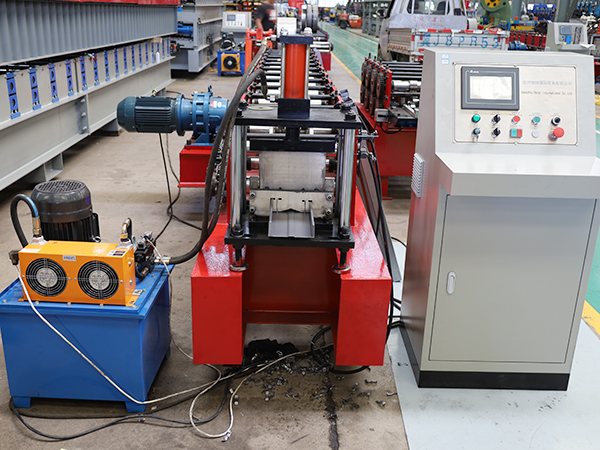
Any factory operator knows that production uptime is money, and unexpected machine downtime can disrupt delivery schedules and erode profitability. Roll forming machines, while known for their reliability and continuous operation capabilities, still require regular attention to perform at their best. Establishing a disciplined maintenance routine and understanding how to diagnose common problems quickly are essential skills for anyone managing roll forming equipment.
Roll forming machines operate under significant mechanical stress. Forming rollers apply continuous bending forces to metal strips as they pass through each station, and the drive chain or gear system handles sustained power transmission throughout production runs that can last for days or weeks without interruption. Over time, this operational load takes a toll on bearings, drive components, roller surfaces, and structural frames.
Regular maintenance catches wear before it leads to equipment failure. A worn bearing that goes unnoticed may seize during a production run, causing damage to the roller shaft, the roller itself, and potentially the entire forming line. The cost of emergency repairs—including replacement parts, labor, and lost production—almost always exceeds the cost of routine preventive maintenance.
Daily inspection and minor maintenance tasks should become a standard part of every operator's routine before and after each shift. Start each day with a visual inspection of all guards, safety devices, and emergency stop systems to ensure they function correctly. Check the oil level in the hydraulic power unit and verify that there are no visible leaks around seals, fittings, or pipe connections.
Lubrication points across the machine should receive attention according to the manufacturer's schedule. Roll forming machines have numerous bearings, guide rails, and sliding surfaces that require consistent lubrication to operate smoothly. Use only the lubricant types specified by the equipment manufacturer, as using incorrect oils or greases can damage seals or reduce lubricating effectiveness.
Before starting production, run the machine empty for a few minutes and listen for unusual sounds. Grinding, squealing, or irregular clicking noises often indicate bearing wear, inadequate lubrication, or misaligned components. Addressing these symptoms early prevents escalation into more serious problems.
Beyond daily routines, more comprehensive periodic checks should be scheduled—typically weekly, monthly, and quarterly depending on production intensity. Monthly inspections should include checking the condition of all roller surfaces for wear, scoring, or chip damage. Even minor surface defects on a forming roller can imprint onto every sheet produced, creating quality problems throughout an entire production batch.
Drive chain tension should be measured and adjusted to maintain proper engagement with sprockets. Chain that becomes too loose can jump teeth, causing inconsistent material feed and potentially damaging the drive system. Gearboxes should be inspected for oil contamination and seals should be checked for signs of leakage. The electrical system, including motor connections, contactors, and control wiring, deserves periodic attention from a qualified electrician to identify loose connections or heat-damaged components before they cause failures.
Understanding the root causes of typical roll forming defects enables faster diagnosis and resolution. A common issue is bow and worming—uneven waves along the length of a finished panel—which typically stems from mismatched roller alignment or uneven entry guide settings. Adjusting the lateral position of individual roller stations until the strip flows evenly through the entire line usually resolves this problem.
Edge wave, where the side edges of the panel curl upward or downward, is often caused by excessive vertical stress at the entry or exit of the forming line. Adjusting the top roller pressure or modifying the geometry of the first and last forming stations can address this condition. Surface scratching on finished panels usually indicates the presence of foreign material between the rollers and the strip, or roller surfaces that have accumulated wear marks—cleaning or re-grinding the affected rollers typically resolves this issue.
Profile dimensional deviations, where finished panels fail to meet width or depth specifications, often trace back to worn forming rollers or loose roller mounting hardware. Inspecting the roller bores, bearings, and shaft keys for wear and replacing worn components restores dimensional accuracy.
The most successful factories treat their roll forming equipment as long-term assets deserving ongoing investment in maintenance and upgrading. Keeping detailed service records—tracking which components were serviced, when, and what symptoms prompted the work—helps identify patterns and predict future maintenance needs. When roller profiles wear beyond acceptable tolerances, having the rollers re-ground or replaced with fresh profile inserts restores production quality without requiring a full machine replacement.
Partnering with the original equipment manufacturer or a certified service provider for periodic professional inspections adds an extra layer of assurance. These specialists can perform precision alignment checks, structural integrity assessments, and control system diagnostics that go beyond routine operator-level maintenance.
Consistent roll forming machine maintenance is one of the most cost-effective investments a factory can make. By following a structured maintenance schedule, training operators to recognize early warning signs, and addressing problems proactively rather than reactively, production facilities can maximize equipment uptime, maintain consistent product quality, and extend the useful life of their roll forming lines significantly.
References
CRC Press – Roll Forming Handbook, 2nd Edition, Edited by M. Bagheripoor and T. Hatvani.
Society of Manufacturing Engineers (SME) – Preventive Maintenance Best Practices for Metal Fabrication Equipment.
International Journal of Advanced Manufacturing Technology, Vol. 114, 2021 – Predictive Maintenance Strategies for Roll Forming Equipment.
Machine Design Handbook, 3rd Edition, McGraw-Hill – Chapter on Metal Forming Equipment Maintenance.

Copyright © 2026-2027 Mingmu Roll Forming Machinery Manufacture All Rights Reserved