


Release time:2026-07-02 15:01:25 view count:122
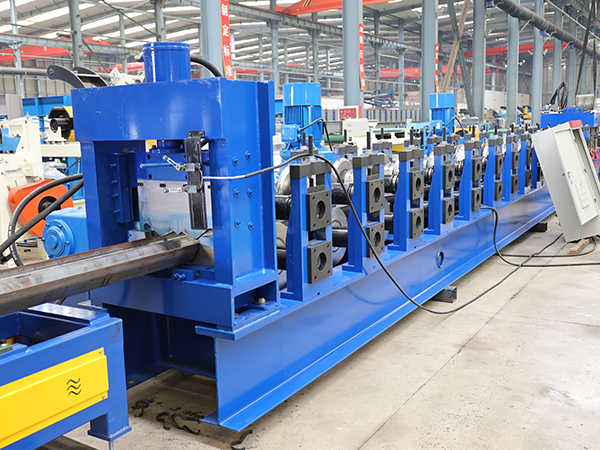
The construction industry consumes enormous quantities of precision-formed metal components every year, from the roofing sheets that shelter warehouses to the structural purlins that support entire building frames. Much of this production flows from roll forming machines operated by dedicated manufacturers and suppliers who have built their businesses around this versatile manufacturing process. Understanding where and how roll forming fits into construction projects helps buyers appreciate the value chain that delivers these essential materials to building sites.
Metal roofing and wall cladding represent the largest single application category for roll formed products in the construction sector. Trapezoidal and corrugated metal panels produced on roll forming lines cover the roofs and walls of factories, warehouses, agricultural buildings, commercial complexes, and increasingly, modern residential homes. The combination of weather resistance, light weight, and long service life makes these panels attractive alternatives to traditional roofing materials in virtually every climate zone.
Standing seam roofing systems, where adjacent panels interlock with raised seams that run the full length of the roof slope, are particularly well-suited to roll forming production. The precise dimensional control that roll forming delivers ensures that the seams align correctly during installation, creating a weatherproof connection that performs reliably for decades. Factory-applied sealant channels in the panel profiles add additional leak protection at overlap points.
Beyond surface cladding, roll forming produces the load-bearing skeletal components that give steel-framed buildings their structural integrity. Purlins—horizontal roof members that transfer loads from the roof skin to the primary frame—and wall girts perform this structural function in pre-engineered metal buildings, which represent a significant share of all commercial and industrial construction worldwide.
Cold-formed steel studs produced on roll forming lines serve as the wall framing in an increasing number of residential and commercial projects. Compared to traditional wood or hot-rolled steel studs, cold-formed steel studs offer straight, consistent dimensions, fire resistance, and protection against rot and insect damage. Factory-produced studs with pre-punched knockouts for electrical and plumbing services speed up on-site installation considerably.
Road safety infrastructure depends heavily on roll formed components, particularly guardrail panels and post sections. The W-beam and thrie-beam guardrails installed along highways, bridges, and elevated roadways are manufactured almost exclusively using roll forming technology. These safety barriers must meet rigorous dimensional and performance standards, as their effectiveness during vehicle impacts depends on consistent material properties and profile geometry.
Sound barrier walls along urban highways and railway lines also use roll formed components. These acoustic panels, typically manufactured from galvanized or color-coated steel, provide noise reduction for adjacent residential areas while standing up to decades of weather exposure. The combination of roll forming efficiency and durable surface treatments makes metal acoustic barriers a cost-effective infrastructure solution for municipal planners.
Agricultural construction represents a substantial and consistent market for roll formed metal products. Barns, storage sheds, poultry houses, and livestock shelters benefit from the combination of durability, cost efficiency, and rapid installation that metal roofing and wall systems provide. The ability to span large distances without intermediate support columns maximizes usable interior space—a critical consideration for equipment storage, grain handling, and livestock housing operations.
Specialized agricultural profiles, including those designed to resist the corrosive environment of livestock facilities or to accommodate specialized ventilation systems, are available from manufacturers with appropriate tooling and material expertise. A factory with flexible roll forming capabilities can produce both standard and specialized agricultural profiles on the same equipment with minimal changeover time.
The rapid growth of solar energy installation has created a new application domain for roll formed metal components. Solar panel mounting structures—including rail systems, clamp profiles, and mounting brackets—are increasingly produced using roll forming. These components must be strong enough to resist wind loads on rooftop and ground-mounted arrays while remaining light enough to simplify handling and installation.
The surface coating requirements for solar mounting components differ somewhat from standard construction applications, as these parts are often exposed to higher levels of ultraviolet radiation and temperature extremes. Manufacturers who understand these specialized requirements can advise buyers on appropriate material selection and coating specifications.
Modern architecture increasingly incorporates metal panels as design elements rather than purely functional components. Curved and perforated metal facade panels produced using roll forming technology appear on commercial office buildings, retail centers, and public facilities around the world. The ability of roll forming to produce complex curved or shaped panels opens creative possibilities for architects that would be difficult or impossible with other fabrication methods.
Ceiling grid systems, both functional and decorative, represent another architectural application area where roll forming efficiency and precision combine to deliver cost-effective building components. Factory finishing with powder coating or other treatments produces ceiling panels with consistent appearance and long-term durability.
Reliable suppliers and manufacturers form the critical link between roll forming production facilities and construction sites. The ability to deliver specified materials on schedule directly affects whether a construction project stays on time and within budget. Experienced suppliers understand the specifications and tolerances that building codes and engineering designs require, ensuring that delivered materials meet acceptance criteria without requiring rework or rejection.
A manufacturer who stocks common profile sizes can fulfill urgent replacement or extension orders quickly, while one with in-house tooling design and fabrication capabilities can develop custom profiles for unique project requirements. This combination of standard product availability and custom manufacturing flexibility distinguishes capable suppliers in a competitive market.
Roll forming touches virtually every segment of the construction industry, from the roofs overhead and the walls around us to the highways we travel and the infrastructure that supports modern urban life. The process's combination of precision, efficiency, and versatility makes it the manufacturing method of choice for millions of metal building components produced globally each year. Partnering with experienced manufacturers and suppliers ensures consistent quality, reliable supply, and access to the full range of profiles and treatments that today's construction projects demand.
References
World Steel Association – Steel in Construction: Market Trends and Applications Report 2022.
American Society of Civil Engineers (ASCE) – Cold-Formed Steel Design Manual, Latest Edition.
Metal Construction Association – Technical Guide for Standing Seam Metal Roofing Systems.
International Association of Cold Formed Steel Engineers (IACFS) – Application Manual for Cold-Formed Steel in Residential Construction, 2020.

Copyright © 2026-2027 Mingmu Roll Forming Machinery Manufacture All Rights Reserved