


Release time:2026-06-29 09:49:43 view count:169
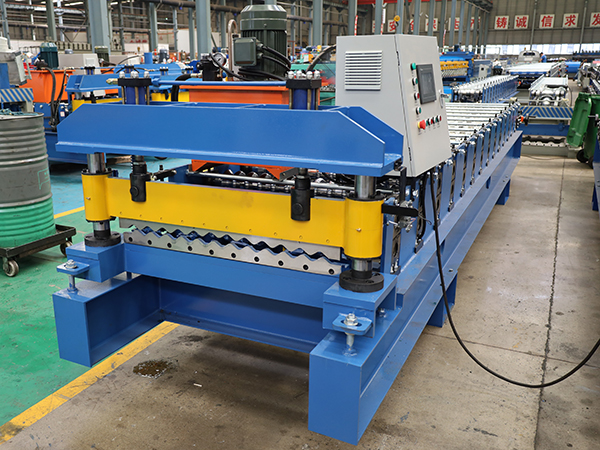
Purlins are the horizontal structural members that support roof loads in steel-framed buildings, and their quality directly affects the overall integrity of the construction. A purlin roll forming machine enables factories to mass-produce these critical structural components with the dimensional accuracy and consistency that engineers and builders demand. Whether you are a supplier serving the construction industry or a contractor evaluating manufacturing options, understanding the capabilities of purlin roll forming equipment helps in making strategic sourcing decisions.
In steel building construction, purlins function as secondary framing members that transfer roof loads to primary structural elements such as rafters and columns. These members must possess adequate strength to resist bending stresses while remaining light enough to simplify handling and installation. The geometry of the roll formed profile—typically a C-section, Z-section, or Sigma shape—determines the component's load-bearing capacity and structural efficiency.
Purlins are commonly used in pre-engineered metal buildings, agricultural facilities, warehouses, and commercial complexes. Their popularity stems from the combination of structural performance, cost-effectiveness, and the speed with which they can be installed compared to traditional site-built framing systems.
The roll forming process for purlins follows the same fundamental principle as other roll forming applications, but the profile depth and material thickness typically exceed those used for roofing sheets. A typical purlin roll forming machine processes cold-rolled steel strips with thicknesses ranging from 1.5 to 4.0 millimeters, producing sections with depths between 100 and 400 millimeters depending on the building design requirements.
The machine line typically includes a decoiler, a feeding and leveling unit, the main roll forming section with 16 to 28 forming stations, and a hydraulic cutoff saw for precise length cutting. Some advanced lines incorporate punching and drilling stations that create fastener holes and service openings during the forming process, eliminating the need for secondary machining operations and reducing overall production time.
C section purlins are named for their cross-sectional shape, which resembles the letter C. They are most effective when used in single-span configurations or as side wall girts where their profile orientation suits the loading conditions. C sections are straightforward to fabricate and install, making them a popular choice for straightforward building designs.
Z section purlins, shaped like the letter Z, offer a notable structural advantage in multi-span configurations. Their geometry allows them to overlap at interior support points, creating a continuous beam effect that distributes loads more efficiently across the building frame. This makes Z purlins the preferred choice for larger buildings with multiple bays and higher roof loads.
A well-equipped purlin factory offers products manufactured from different steel grades and surface treatments to suit varied environmental conditions. Hot-dip galvanized steel provides excellent corrosion resistance and is the standard choice for most structural applications. Pre-painted galvanized steel combines corrosion protection with an architectural finish suitable for visible applications.
For buildings in highly corrosive environments, such as coastal facilities or chemical processing plants, Galvalume-coated steel offers superior protection against rust and degradation. A reliable manufacturer can guide buyers on the most appropriate material specification for their specific application.
Access to an in-house purlin roll forming operation gives construction suppliers a significant competitive edge. By manufacturing their own structural components, suppliers can control lead times, ensure quality consistency, and respond quickly to project changes without depending on external steel service centers. The ability to produce custom lengths and hole patterns on demand reduces material waste and field labor requirements.
For contractors, sourcing purlins from a dedicated manufacturer ensures predictable delivery schedules and consistent dimensional quality, which translates into smoother installation processes and fewer delays on the job site.
The selection of a purlin roll forming machine supplier should be based on the manufacturer's technical expertise, equipment customization capabilities, and track record in the structural steel sector. Key considerations include the maximum material thickness and width the machine can process, the complexity of profiles it can produce, and the level of automation integrated into the control system. A manufacturer offering comprehensive training and ongoing technical support provides additional value beyond the initial equipment sale.
Purlin roll forming machines are essential equipment for any factory or supplier serving the commercial and industrial construction markets. Their ability to produce high-quality structural components efficiently and consistently makes them a valuable long-term investment. Working with an experienced manufacturer ensures that your production line meets current industry standards and can adapt to evolving construction requirements.
References
American Iron and Steel Institute (AISI) – North American Specification for the Design of Cold-Formed Steel Structural Members.
Steel Construction Institute (SCI) – Design of Purlins and Girts, Publication P287.
International Association of Cold Formed Steel Engineers (IACFS) – Manual for Cold Formed Steel Structures.
Journal of Constructional Steel Research, Vol. 168, 2020 – Performance of High-Strength Steel Purlins in Industrial Buildings.

Copyright © 2026-2027 Mingmu Roll Forming Machinery Manufacture All Rights Reserved