


Release time:2026-06-26 09:49:21 view count:71
Metal roofing has become one of the most preferred choices for residential, commercial, and agricultural buildings around the world. At the heart of this industry is the metal roofing sheet roll forming machine, a specialized piece of production equipment that transforms raw steel or aluminum coils into high-performance roof panels. Understanding how these machines work and what to look for in a supplier helps buyers make informed purchasing decisions for their factory operations.
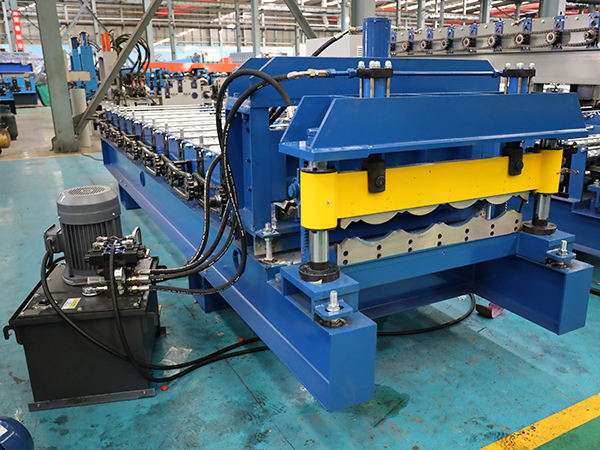
Roll forming is a continuous bending operation in which a flat metal strip passes through sets of opposed rollers, each pair adding a specific degree of bend to progressively shape the material into the final profile. For roofing sheet production, the process starts with a decoiler that feeds the coil strip into the forming line. The strip travels through typically 12 to 24 forming stations, each equipped with precision-machined rollers that define the roof panel's geometry.
After the final forming station, a flying cutoff shear trims each sheet to the programmed length while the strip remains in continuous motion. This approach allows for production without stopping the material flow, which significantly increases throughput compared to batch cutting methods.
Roofing sheet profiles vary based on regional preferences, building codes, and architectural requirements. The most common profiles include trapezoidal, corrugated, and tile-shaped designs. Trapezoidal sheets feature a ribbed profile with flat sections that provide excellent load distribution and water runoff capability. Corrugated profiles, with their wavy pattern, are valued for their strength and classic appearance, commonly found on agricultural and industrial buildings.
Tile-effect roofing sheets offer the aesthetic appeal of clay or concrete tiles while remaining significantly lighter and more affordable. These profiles typically incorporate interlocking ribs that mimic the look of traditional roofing materials, making them popular in residential construction projects where visual appearance matters alongside structural performance.
A quality roofing sheet factory processes various metal types depending on the application requirements. Galvanized steel coils, with their zinc coating providing corrosion resistance, form the most common base material. Galvalume steel, coated with an aluminum-zinc alloy, offers superior corrosion protection in environments with high humidity or coastal salt exposure.
Aluminum coils are increasingly popular for roofing applications due to their light weight and natural corrosion resistance. Color-coated coils, where the metal strip carries a pre-applied paint film, allow factories to produce finished roofing sheets in a wide range of colors without additional painting operations.
Roll formed metal roofing sheets offer compelling advantages over traditional roofing materials. Their lightweight nature reduces structural load requirements, which can translate into savings on building frame materials and construction labor. The interlocking design of profiled sheets enables rapid installation, reducing labor costs and project timelines significantly.
Durability is another hallmark of metal roofing produced on modern roll forming lines. Properly coated steel roofing sheets can last 40 years or more with minimal maintenance, outperforming many alternative roofing materials in terms of service life. Factory quality control ensures consistent dimensions, which means each sheet interlocks precisely with its neighbors, creating a weathertight seal across the entire roof surface.
For buyers in the market for a metal roofing sheet roll forming machine, the choice of supplier carries long-term implications for production quality and operational costs. A manufacturer with extensive experience in roll forming technology can provide valuable guidance on roller design, machine capacity, and customization options for specific profile requirements.
Suppliers should be evaluated based on their technical documentation quality, after-sales support infrastructure, and the availability of spare parts. A machine purchased from a reputable manufacturer typically delivers more consistent performance over its operational life, providing better return on investment for the factory.
The metal roofing sheet roll forming machine is a cornerstone of the modern construction materials industry. Its ability to produce consistent, durable, and visually diverse roof panels makes it an essential asset for any manufacturer serving the building and construction sector. Investing in reliable equipment from an experienced supplier ensures that your factory can meet growing demand for quality metal roofing products.
References
Metal Construction Association – Technical Guide for Metal Roofing Systems, 2020 Edition.
American Society of Civil Engineers (ASCE) – Specification for Metal Roofing Installation, SEI/ASCE 8-02.
European Convention for Constructional Steelwork – Guidelines for Metal Roof and Wall Cladding.
Sheet Metal Industries Federation – UK Metal Roofing Standards and Best Practices Handbook.

Copyright © 2026-2027 Mingmu Roll Forming Machinery Manufacture All Rights Reserved