


Release time:2026-06-16 18:13:17 view count:130

Selecting the correct metal roofing machine is one of the most consequential decisions a construction firm or steel building contractor will make. The equipment you choose directly influences production throughput, finished roof quality, and your long-term cost structure. A trusted roofing machine manufacturer can provide guidance, but understanding the evaluation framework yourself puts you in a stronger purchasing position.
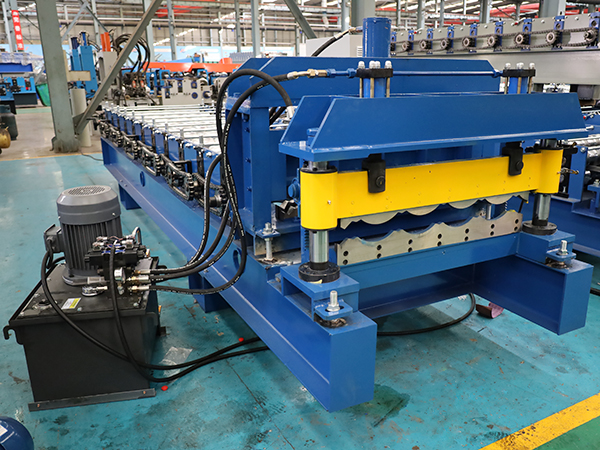
The first question any buyer should answer is simple: how much roofing material do I need to produce per day, per week, or per month? Projects with aggressive timelines demand high-speed automated lines capable of outputting 20 meters or more of finished panel per minute. Smaller operations or job-site fabricators may find that a compact, manually fed machine delivers sufficient volume without the overhead of a large production floor setup.
Consider the profile depth and width range you intend to work with. Some machines handle only shallow trapezoidal ribs up to 25mm deep, while heavy-duty industrial roll formers accommodate deep corrugation profiles exceeding 75mm. If your portfolio includes both residential and commercial projects, look for a supplier that offers quick-change roller sets rather than investing in separate machines for each profile type.
Metal roofing machines must be rated for the specific coil materials you plan to process. The typical range covers galvanized steel from 0.3mm to 0.8mm, Galvalume from 0.4mm to 0.7mm, and aluminum coils up to 1.0mm. Not every machine handles this entire spectrum — some entry-level models top out at 0.5mm and will struggle or suffer premature roller wear if pushed beyond their design specification.
A professional supplier will share material compatibility charts and may even run test coils at their factory before finalizing a purchase order. This step is frequently skipped by buyers eager to finalize quotes, but it eliminates costly surprises after installation at your own facility.
Modern roofing equipment generally falls into two drive categories: servo-controlled feeding and mechanical crank-gear systems. Servo-driven machines deliver superior dimensional accuracy, with length tolerance held within +/- 1mm across hundreds of consecutive panels. The electronic control also enables batch quantity programming, auto-shear cutting, and remote diagnostics — features that become indispensable as production volumes increase.
Mechanical machines remain popular in price-sensitive markets. They are simpler to maintain, with no PLC or inverter electronics to troubleshoot. However, the feeding inconsistency inherent in gear-driven systems can produce cumulative tolerance drift over long runs, which matters greatly when working to tight architectural specifications.
Even the finest metal roofing machine will require servicing at some point. The manufacturer you partner with should maintain a catalog of common wear parts — rollers, bearings, shear blades, chain drives — and be capable of shipping replacements within 48 to 72 hours globally. Equipment downtime translates directly to project delay costs that dwarf the original price premium paid for a machine with better support coverage.
Ask prospective suppliers about their technical documentation: Are operator and maintenance manuals provided in your language? Do they offer on-site installation and operator training? A supplier that provides thorough onboarding demonstrates confidence in their product and commitment to your success as a long-term customer.
The purchase price of a metal roofing machine is only the starting point. Factor in energy consumption, tooling replacement cycles, floor space requirements, and the labor cost per panel produced. An automated line with a higher upfront cost may deliver a lower cost-per-panel over three years due to reduced labor requirements and higher first-pass yield rates.
Request a production cost breakdown from the manufacturer or from other operators in your region who use similar equipment. Industry forums and trade associations often publish benchmark data on labor and material yields that help contextualize whether a particular machine configuration makes economic sense for your operation.
Choosing the right metal roofing machine for construction projects requires balancing production volume, material capabilities, technical specifications, and long-term support infrastructure. By defining your throughput requirements upfront, verifying material compatibility, and evaluating after-sales service quality, you position your organization to select equipment that performs reliably year after year. A methodical evaluation process protects your investment and ensures your supplier relationship delivers sustained value throughout the equipment lifecycle.
Chen, W. and Thompson, R. (2018). Industrial Roll Forming Processes and Equipment Design. Journal of Manufacturing Technology, 34(2), 112-128.
International Association of Metal Constructors (IAMC). (2020). Technical Guidelines for Selection and Operation of Roll Forming Machinery. IAMC Technical Publications Series, Vol. 12.
Wang, L. and Liu, H. (2022). Advances in Automated Roofing Panel Manufacturing Systems. Construction Equipment Review, 19(4), 78-93.
Copyright © 2026-2027 Mingmu Roll Forming Machinery Manufacture All Rights Reserved