


Release time:2026-06-06 17:06:56 view count:73
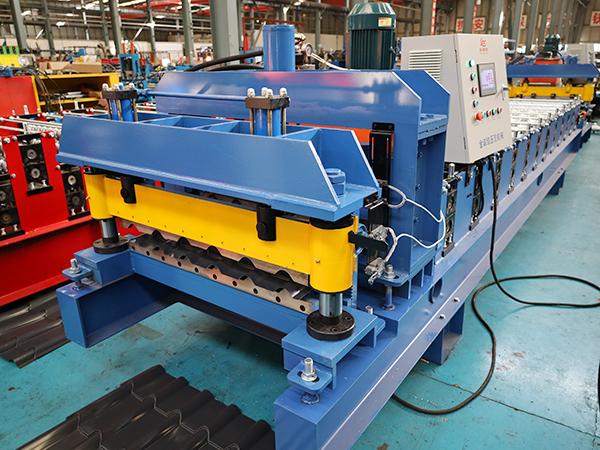
Purlin roll forming machines form the backbone of modern steel frame construction. Whether you are manufacturing C-sections, Z-sections, or U-shaped structural members, understanding how to operate, configure, and maintain your roll forming equipment determines the quality of every piece that comes off the line. This guide walks through the complete operational workflow from material setup to finished product inspection.
Roll forming is a continuous metalworking process that gradually shapes flat coil stock into structural profiles through a series of opposed roller stations. Each station bends the material a small amount, and by the final station the profile is fully formed. For purlin manufacturing, this process must achieve tight dimensional tolerances — flange width, web height, and lip length — because these components are the load-bearing skeleton of warehouses, factories, and commercial buildings.
The process begins with a decoiler feeding steel strip into the forming section. The strip passes through progressively shaped rollers, each contributing to the final profile geometry. At the end of the line, a flying cutoff shear trims each purlin to programmed length. The entire sequence is coordinated by a PLC control system that manages decoiler tension, feeding speed, and cut timing simultaneously.
Proper setup is the single most important factor determining product quality. Before running material, verify that all roller stations are aligned to the machine's centerline and that the upper and lower roller assemblies apply uniform pressure across the full width of the strip. Uneven pressure produces differential wall thickness reduction, known as compensation, which leads to twisting or bowing in the finished purlin.
When switching between profile types — for example, changing from a C100 to a Z150 section — clean the roller shafts and inspect each roller for signs of surface wear, spalling, or indentation. Worn rollers produce inaccurate dimensions and surface defects that compromise the structural integrity of the purlin. Replace any roller showing significant wear before proceeding with production.
The steel grade and coating used for purlin manufacturing must match the structural requirements of the end application. Hot-dip galvanized coil is the most common choice for structural purlins because the zinc coating provides corrosion resistance without additional painting. The coil must be free of edge burrs, buckles, and_welded joints in the section that will be formed, as these defects disrupt the forming process and can cause machine jams or damage to the roller surfaces.
Store coils in a dry environment and handle them carefully during loading onto the decoiler. Dropped coils or rough uncoiling can introduce kinks that propagate through the entire length of material, resulting in unusable finished product. A well-organized factory floor with proper coil handling equipment reduces material waste significantly.
Running speed affects both throughput and product quality. Higher speeds increase output but reduce the time available for material to flow through each roller station cleanly. At excessive speeds, the steel strip can de-bond from the rollers or develop surface scratches from slippage. Most experienced operators find that 80-120 meters per minute achieves a good balance for standard C and Z purlins in 1.5mm to 3.0mm thickness.
During a production run, check the first five and last five pieces from every coil for dimensional accuracy. Use calipers to verify web height and flange width against specification sheets. If dimensions drift, stop the line and re-check roller alignment before continuing. Catching dimensional errors early prevents the cost of scrap and rework.
A structured maintenance routine extends the operational life of your roll forming equipment and keeps quality consistent over time. Daily tasks include lubricating chain drives, checking hydraulic fluid levels, and inspecting roller surfaces for debris or damage. Weekly maintenance should cover gear box oil analysis, PLC diagnostic checks, and verification of safety interlock functionality.
Keep a maintenance log that records every service action, part replacement, and machine adjustment. This documentation helps identify patterns — such as a particular roller that consistently wears faster — and informs purchasing decisions for replacement tooling. Factories that maintain detailed records typically achieve higher equipment uptime and lower per-unit production costs.
Mastering purlin roll forming machine operations requires attention to setup precision, material quality, operational parameters, and disciplined maintenance. Each of these elements contributes to the dimensional accuracy and surface finish that your customers demand. By treating the roll forming process as an integrated system rather than a series of independent steps, you can optimize throughput while maintaining the quality standards that define a professional manufacturing operation.
Parker, J. and Davies, A. (2019). Roll Forming Technology for Steel Structural Sections. International Journal of Metal Processing, 45(3), 201-215.
European Steel Fabrication Association (ESFA). (2021). Operational Standards for Roll Forming Equipment in Structural Manufacturing. ESFA Technical Handbook, 3rd Edition.
Zhang, Y. (2023). Optimizing Production Efficiency in Cold-Formed Steel Manufacturing Lines. Journal of Manufacturing Systems, 67(1), 55-70.

Copyright © 2026-2027 Mingmu Roll Forming Machinery Manufacture All Rights Reserved