


Release time:2026-08-27 15:44:02 view count:163
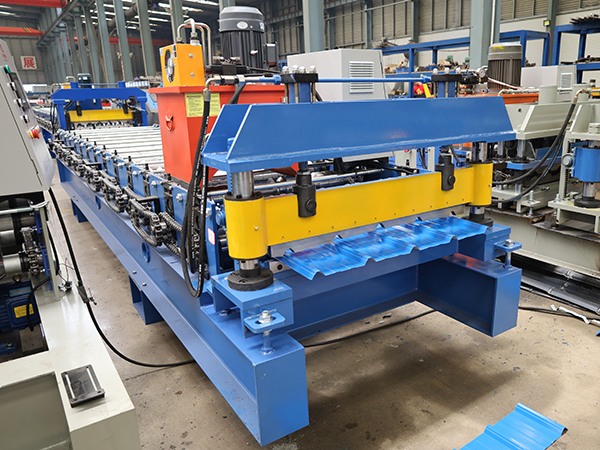
A channel roll forming machine turns coil steel into C and U channels, the simple but essential sections used for wall studs, ceiling grid, cable tray, racking strut and countless brackets. Because the channel is so widely used, a supplier with a flexible line can serve several markets from one toolset. This article covers what the machine does, the holes and lips that matter, and how to match it to the work.
The channel is a U or C shaped section with two flanges turned in. That shape gives it stiffness for its weight and a lip to bolt or clip into. In buildings it becomes a stud, a furring channel or a top track. In services it becomes strut that carries pipes and cables. The same basic profile, with different depth and hole pattern, serves all of them, which is why a channel roll forming machine is one of the most useful lines a factory can own. Get the section right and one line feeds several customers.
Most channels leave the line pre-punched. Strut gets a regular row of holes or slots for clamps; studs get holes for services and a notch at the end for assembly. The punch station places these to a tight pitch, and on a good line the punch and shear are synchronized so the hole-to-end dimension stays locked to the drawing. Watch the punch edge quality: a clean hole resists crack initiation better than a torn one, and on a load-carrying strut that is not a detail anyone wants to discover on site.
The flange lip is what separates a channel from a simple bent strip. A small return on the lip adds a lot of stiffness and gives a surface to fix to. The lip angle and height are set in the last roller stations, and they must hold across the material range. A manufacturer should ask for your flange and lip sizes before cutting rollers, because changing them later means new tooling and downtime. Get the section right first and the line will make it all day without a second thought.
Channels run from light 0.6 mm for ceiling grid up to 2 mm or more for heavy strut, in galvanized or pre-painted steel. The yield strength sets how the rollers load and how stiff the frame must be. A line built around a narrow band will struggle at the edges, so tell the supplier your thinnest and thickest material. The roller finish should suit any pre-painted surface so the channel leaves the line looking like a product, not a test scrap that nobody would install.
Channels are used in quantity, often hundreds of identical pieces in one job, so each must match the next. If the hole pitch and the lip are consistent, the installer clips and bolts without thinking. If the line drifts, the crew shims and forces, and the job slows. A channel roll forming machine rated for tight tolerance pays back in faster installation and fewer rejects. Factories that run their own line measure the first channel of each coil against a master and keep that record, which is the habit that shows in the finished work.
Channel runs long and light, so a steady decoiler and clean exit keep things moving. Output is quoted in meters per minute, but the figure that matters is correctly holed, lipped section reaching the stack without a stop. A line that runs steady all shift beats a faster one that jams. Bundle by profile and hole pattern so the customer receives a kit, not a pile of mixed sections that someone has to sort by hand before use.
Buy the machine matched to your section sizes and hole patterns, with clean rollers for pre-painted steel and a punch plan that fits your market. A manufacturer with its own factory, spare punches and a maintenance plan tied to output is worth more than the lowest quote, because channel work is high-volume and a stop hurts the whole downstream assembly. The right supplier hands over a line your customers keep reordering rather than one that needs constant fixing.
Channels stack and band neatly, which makes them cheap to ship compared with bulky assemblies. A supplier should bundle by profile and hole pattern so the customer opens a kit rather than a mixed pile, and band the bundle so it stays square in transit. Because the line makes long, uniform lengths, a well-run channel roll forming machine feeds a steady dispatch without the sorting that short offcuts demand. Tidy bundling is part of the product, not an afterthought.
American Iron and Steel Institute. AISI S100, North American Specification for the Design of Cold-Formed Steel Structural Members.
European Committee for Standardization. EN 1090-1, Execution of steel structures.
ASTM International. ASTM A653/A653M, Standard Specification for Steel Sheet, Zinc-Coated by the Hot-Dip Process.
ISO. ISO 9001:2015, Quality management systems requirements.

Copyright © 2026-2027 Mingmu Roll Forming Machinery Manufacture All Rights Reserved